
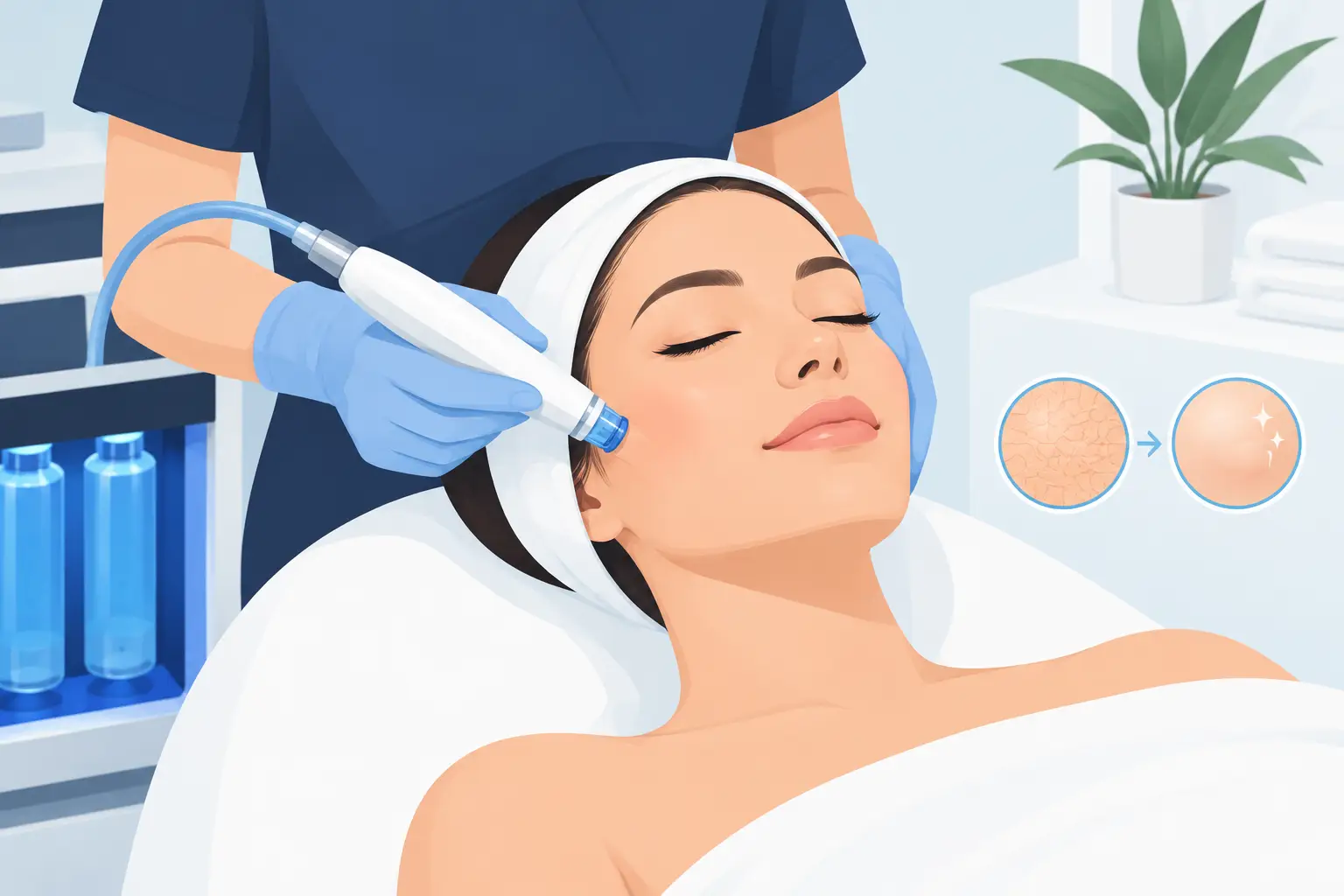
Your skin can feel tight after cleansing, look dull beneath makeup, and still produce oil by lunchtime. That combination is often dehydration, not a sign that you need to scrub harder or skip moisturizer. A HydraFacial for dehydrated skin can be a helpful reset because it pairs gentle exfoliation with targeted hydration, but the best results come from treating the reason your skin became thirsty in the first place.
At Bare & Bloom, real skin, real progress means looking past the surface. Dehydration can overlap with acne, dark spots, sensitivity, and uneven texture. Your treatment should account for all of it, not just deliver a temporary glow.
Dehydrated skin is not the same as dry skin
Dry skin is a skin type associated with lower oil production. Dehydrated skin is a condition where the skin lacks water. A person with oily, combination, acne-prone, or melanin-rich skin can absolutely be dehydrated.
Common signs include tightness, fine lines that appear more noticeable than usual, dullness, flaky patches, makeup that separates, and skin that feels both oily and uncomfortable. Sometimes dehydration shows up as congestion too. When the barrier is stressed, skin may compensate with more oil, while dead skin cells and excess sebum can collect in pores.
The cause is rarely just one thing. Strong cleansers, overusing exfoliating acids or retinoids, acne treatments, dry indoor air, sun exposure, travel, and inconsistent moisturizing can all contribute. For some clients, the issue begins with a well-intended routine that has become too aggressive for their current barrier.
How a HydraFacial supports dehydrated skin
A HydraFacial treatment uses a device-driven process to cleanse, exfoliate, extract, and infuse the skin with hydrating ingredients. The experience can feel polished and luxurious, but its value for dehydration is more practical: it removes buildup that can keep skincare from applying evenly, then helps replenish the skin with humectant-focused hydration.
Gentle resurfacing can improve hydration’s payoff
When dull, compacted dead skin cells sit on the surface, even a good moisturizer may feel like it is not doing much. Controlled exfoliation helps smooth that buildup so skin looks fresher and topical hydration can sit more evenly on the surface.
This matters for clients who feel roughness around the nose, mouth, forehead, or cheeks but cannot tolerate harsh scrubs. Physical scrubs, frequent at-home peels, and rough cleansing tools can create more irritation when the barrier is already struggling. The goal is refined exfoliation, not friction.
Hydration infusion gives skin immediate support
The infusion step is why many dehydrated clients notice a more comfortable, bouncy appearance after treatment. Humectant ingredients, often including hyaluronic acid, attract and hold water at the skin’s surface. Antioxidant support may also be selected based on what the skin needs that day.
That visible plumpness is real, but it is not a permanent replacement for a supportive routine. Think of the treatment as professional reinforcement. It can help skin look and feel better quickly while you build daily habits that protect those results.
Extractions should be personalized
Dehydrated skin can have blackheads and congestion, but aggressive extraction is not automatically the answer. If skin is inflamed, sensitized, or actively peeling, a provider may modify the treatment rather than chase every clogged pore in one appointment.
That is a good sign. Corrective skincare respects the skin’s current capacity. Over-treating a compromised barrier can create redness, irritation, and a longer recovery period, particularly for clients prone to post-inflammatory hyperpigmentation.
When HydraFacial is a smart choice
A HydraFacial may be a strong option if your skin is dull, tight, congested, makeup is not wearing well, or your usual products suddenly seem ineffective. It can also work well before an event when you want a smoother, hydrated finish without significant downtime.
It is especially useful when dehydration is paired with surface buildup and mild congestion. Someone with oily skin and dehydrated cheeks, for example, may benefit from a customized approach that refreshes pores without stripping the face.
For melanin-rich skin, customization is essential. Inflammation can contribute to lingering discoloration, so the best plan balances exfoliation with barrier support. More intensity is not always more effective. A knowledgeable provider should consider active breakouts, sensitivity, post-acne marks, current homecare, and how your skin has responded to treatments in the past.
What a customized appointment should consider
Not every HydraFacial should look the same. Before treatment, a thorough consultation can clarify whether dehydration is the main concern or one piece of a larger pattern involving acne, pigment, texture, or sensitivity. AI skin analysis can help document visible concerns and track changes over time, but your symptoms, lifestyle, and product history matter too.
Your provider may ask about prescription acne medication, retinoids, recent chemical peels, waxing, sun exposure, allergies, and whether your skin has been stinging with products that usually feel fine. These details help determine the right level of exfoliation, extraction, and hydration support.
Treatment tiers can also matter. A foundational HydraFacial may be enough for a first-time client with seasonal dehydration. A more advanced option may make sense for someone combining hydration goals with concerns such as fine lines, visible pores, uneven tone, or stubborn congestion. The right choice depends on your skin’s condition and your long-term plan, not on choosing the most extensive service by default.
Results are immediate, but consistency protects them
Many clients leave with skin that looks clearer, smoother, and more radiant. Tightness may feel reduced, and makeup often applies more evenly. Those are meaningful benefits, especially when your skin has been looking tired or rough.
Still, dehydration can return quickly if the underlying triggers stay in place. A HydraFacial will not fully correct a cleanser that leaves skin squeaky, a retinoid schedule that is too frequent, or a routine with no barrier-supporting moisturizer. It also cannot replace medical care for eczema, rosacea, severe acne, or a persistent rash.
For best results, follow the aftercare provided by your esthetic professional. In the first day or two, keep your routine gentle, avoid adding strong exfoliants unless instructed otherwise, use sunscreen, and give the skin a chance to settle into its newly hydrated state. If you are using acne or pigment-correcting actives, your provider can help you reintroduce them thoughtfully.
Build a home routine that holds onto hydration
Your homecare does not need to be complicated. It needs to be consistent and appropriate for your skin. A gentle cleanser, a humectant serum used on slightly damp skin, a moisturizer that supports the barrier, and daily broad-spectrum sunscreen are often the core pieces.
Acne-prone clients sometimes avoid moisturizer because they fear congestion. Yet skipping moisturizer can leave the skin feeling more reactive and can encourage an oily, unbalanced look. The solution is not necessarily less hydration. It is choosing formulas and treatment frequency based on your individual skin behavior.
If dark spots are part of the picture, barrier care is still foundational. Piling on brightening products while your skin burns or peels can prolong irritation and make discoloration harder to manage. Start with what you see in the mirror, but let the plan address what your skin is signaling underneath.
When to wait or choose another treatment
A HydraFacial may need to be postponed or adjusted if you have an active skin infection, a sunburn, open lesions, a significant eczema flare, or severe irritation. If you are taking certain medications or recently completed another professional treatment, timing matters as well.
Sometimes the better first step is a consultation and a calmer barrier-repair plan. For persistent acne, deep scarring, or pronounced hyperpigmentation, HydraFacial can be a supportive part of care, but it may not be the primary corrective treatment. Chemical peels, acne-focused protocols, microneedling, or a medically guided approach may be considered when your skin is ready.
The most satisfying HydraFacial for dehydrated skin is not the one that promises perfect skin by tomorrow. It is the one that leaves your skin feeling supported, gives you a clear next step, and helps consistency look good on you.
Leave a Reply